

Drug-Free • Reusable for Years • 137-Day Money-Back Guarantee
Even an effective pain relief device can produce inconsistent results if it isn't positioned correctly. On the other hand, small adjustments in placement can meaningfully improve how much relief you actually notice. This guide covers how to place a wearable pain relief device properly, how to adjust it, and how to size it correctly for the area you're targeting.
Pain isn't always felt exactly where it originates — a lower back issue can radiate into the hip, jaw tension can trigger temple pain, shoulder tightness can climb into the neck. Proper placement helps target the actual source of discomfort rather than just the spot that feels most painful, which improves both consistency and effectiveness.
Start close to the source. Place the device directly over the area of discomfort, or slightly adjacent to it if the most tender spot doesn't seem like the right location.
Adjust in small increments. If results aren't immediate, try moving slightly above, below, or to either side. Small changes in position often make a noticeably bigger difference than starting over with a completely different approach.
Be consistent over time. Because a reusable device isn't limited by single-use constraints, you can refine placement over several uses rather than needing to get it perfect on the first try — and once you find what works, you can return to that same positioning every time.
| Area | Placement Guidance |
|---|---|
| Lower back | Center of discomfort; slightly off-center if pain is uneven from side to side |
| Knee | Around the joint, or above/below the kneecap depending on where discomfort concentrates |
| Shoulder | Front or top of the shoulder, over the area of tightness |
| Neck | Base of the neck or upper shoulder, depending on where tension builds |
| Headaches | Temples or back of the neck |
| TMJ/Jaw | Near the jaw joint or upper neck region |
Body-area sizing matters more than people expect. A small, focused area — like a specific trigger point in the shoulder — benefits from a smaller, more targeted device. A broader area, like the lower back or shoulder blade region, may need larger coverage to be effective. Using an undersized device on a large area, or an oversized one on a small joint, is a common reason people feel like "it's not working" when the real issue is simply a size mismatch.
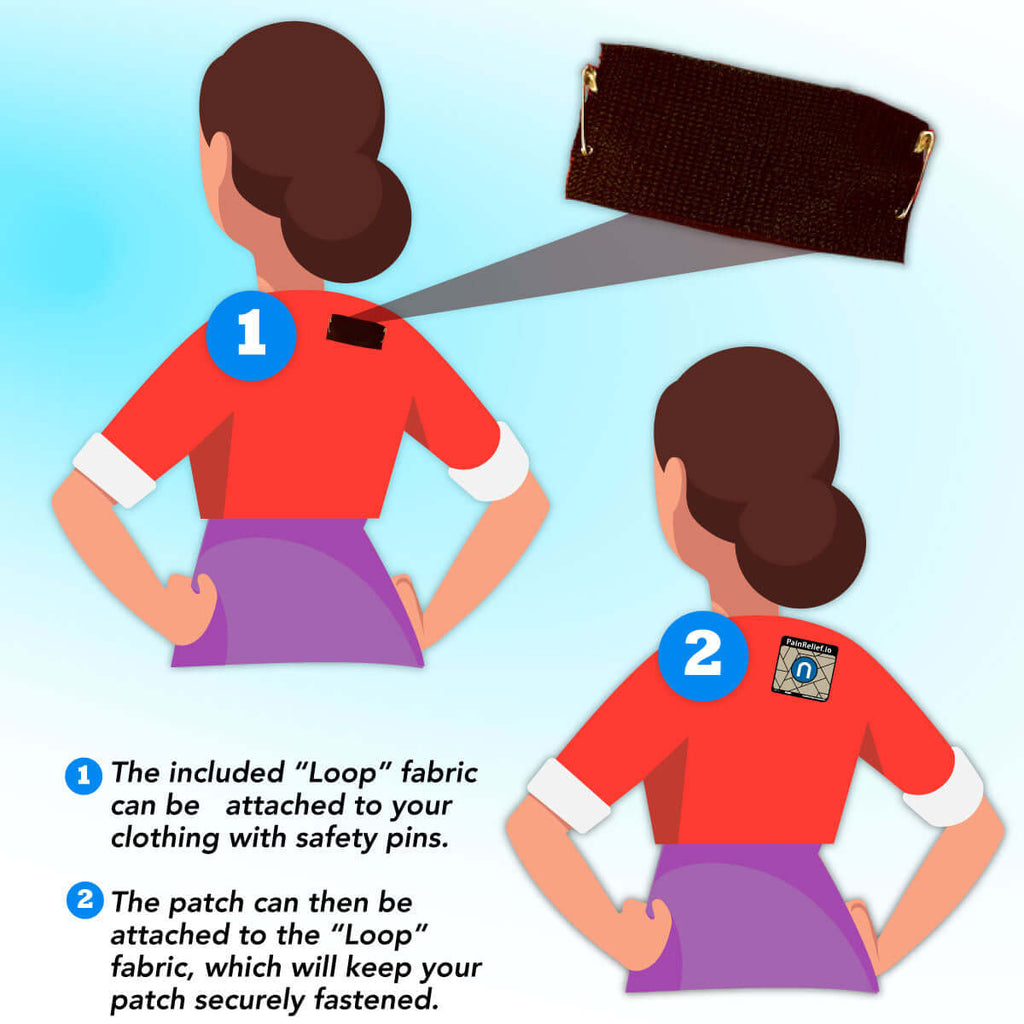
Many reusable wearable devices work over clothing and don't require direct skin contact, which makes them more convenient to reposition throughout the day and more practical for use at work or while traveling. Always follow the specific product's instructions, and avoid placing any wearable over broken, irritated, or freshly shaved skin.
Unlike single-use patches that wear out quickly, a reusable device can typically be worn throughout the day without needing constant replacement — check your specific product's instructions for any wear-time guidance.
Placement is a process, not a single decision. Pay attention to where you notice improvement, how your body responds over a few days, and what placement you keep returning to because it consistently helps. The difference between average results and great results often comes down to these small adjustments — and with a reusable device, you have the flexibility to experiment until you find what actually works for you.
This article is provided for general educational purposes and is not a substitute for professional medical advice, diagnosis, or treatment. Seek medical care for severe, persistent, unusual, or worsening symptoms.
Search
About Us
Terms of Service
Refund Policy
Contact Us
Protect my personal information
Affiliates: Join or Log In
Clinical
Where to Buy
Government Procurement
PainRelief.io® devices are designed to be simple to use. Just place the device near the area of discomfort and adjust as needed to find the position that feels most effective.
Each device is thin, reusable, wearable, and easy to use — with no batteries, no wires, no creams, and no drugs.
Inside each device is our patented NeuroCuple® layer, sealed between two durable waterproof layers. This technology is designed to work with your body’s natural bioelectrical environment in a simple, non-invasive way.
Some users report sensations such as warmth, cooling, or tingling during use, while others feel little or nothing at all.
PainRelief.io® devices are intended as general wellness products designed to support comfort, physical activity, and everyday function.