
Livraison et retours gratuits au-dessus de 100 $ !
If a pain patch is too small, it may miss the area that actually hurts. If it is too large, it can feel awkward, waste coverage, or be harder to place where you need it most. That is why knowing how to choose pain patch size matters more than most people realize.
The right size is not just about the body part. It is about the shape of your pain, how much area you want to cover, whether the discomfort stays in one spot or spreads, and how you plan to wear it during the day. A good fit can make relief feel more targeted, more comfortable, and easier to use consistently.
Start with the actual pain pattern, not the product label. A "back pain" patch, for example, may work well for one person and feel too small or too broad for another because back pain can show up as a tight knot near the spine, a band across the lower back, or soreness that wraps into the hips.
Small patches tend to work best when the pain is concentrated in a very specific point. Think jaw tension near the TMJ, a sore temple, a tender spot in the shoulder, or a focused area of nerve discomfort. In these cases, a compact patch is often easier to place accurately and more comfortable to wear.
Medium sizes make sense when the pain covers a moderate area but still has a clear center. A knee, one side of the neck, part of the lower back, or a single shoulder blade often fits into this category. You want enough coverage to address the painful region without extending so far that placement becomes clumsy.
Larger patches are usually better when pain is broad, diffuse, or harder to isolate. Lower back tension, menstrual cramps across the lower abdomen, widespread muscle soreness, or a larger shoulder area often benefits from more surface coverage. If your first instinct is, "It hurts all through here," that is often a sign you need a bigger size.
One of the simplest ways to figure out how to choose pain patch size is to ask whether your pain is pinpointed or spread out.
Pinpoint pain is easy to identify with one or two fingers. You can press the area and say, "Right there." This is common with TMJ irritation, localized joint tenderness, certain headaches, or a tight trigger point. In that situation, smaller coverage is usually enough.
Spread-out pain feels less exact. You might sweep your hand over the area instead of pointing to one place. This happens a lot with lower back strain, post-workout soreness, neck and shoulder tension, and some forms of chronic discomfort. When pain radiates or covers a wider region, using a larger patch or multiple pieces often makes more sense than trying to force one small patch to do everything.
This is where many people choose the wrong size. They shop by body part alone and overlook the way their pain behaves. The better approach is to match the patch to the pain map on your body.
A patch that looks right on paper can still be wrong if the body area is curved, mobile, or hard to access.
Knees, elbows, jawlines, and shoulders all move a lot. For those areas, a smaller or more flexible format often feels better because it can sit where you need it without bunching or shifting. A patch that is too large for a joint may not lie flat, which can make wear less comfortable.
Flat areas give you more options. The lower back, upper back, abdomen, and thigh often handle larger formats well because there is more room for consistent contact and easier placement.
If your pain sits near the edge of a body part rather than in the center, size matters even more. A patch placed on the side of the neck or along the jaw may need to be narrower than one used on the middle of the back. The goal is not maximum size. The goal is effective coverage that fits the body naturally.
Sometimes one larger patch is not the smartest choice. If pain shows up in two separate spots, like both temples, both sides of the jaw, or two points on either side of the spine, smaller pieces can give you more control.
This is especially useful when pain is symmetrical or split across the body. Instead of covering a lot of unaffected area in between, two targeted pieces let you place relief exactly where it is needed. Multi-piece options also help when discomfort shifts slightly from day to day.
Pain relief has to fit real life. If you are sitting at a desk, commuting, sleeping, walking, or doing chores, patch size affects wearability.
A larger patch can offer better coverage, but it may feel less practical under tighter clothing or on highly mobile areas. A smaller patch may be easier to wear discreetly during work, travel, or exercise. If you know you will be moving a lot, comfort and flexibility matter just as much as coverage.
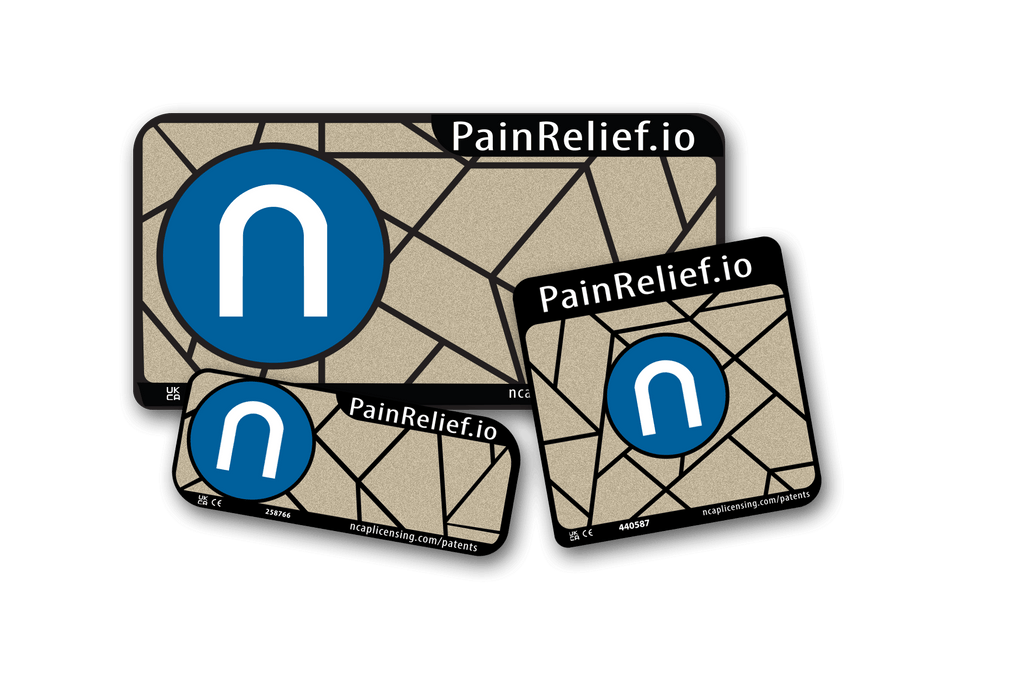
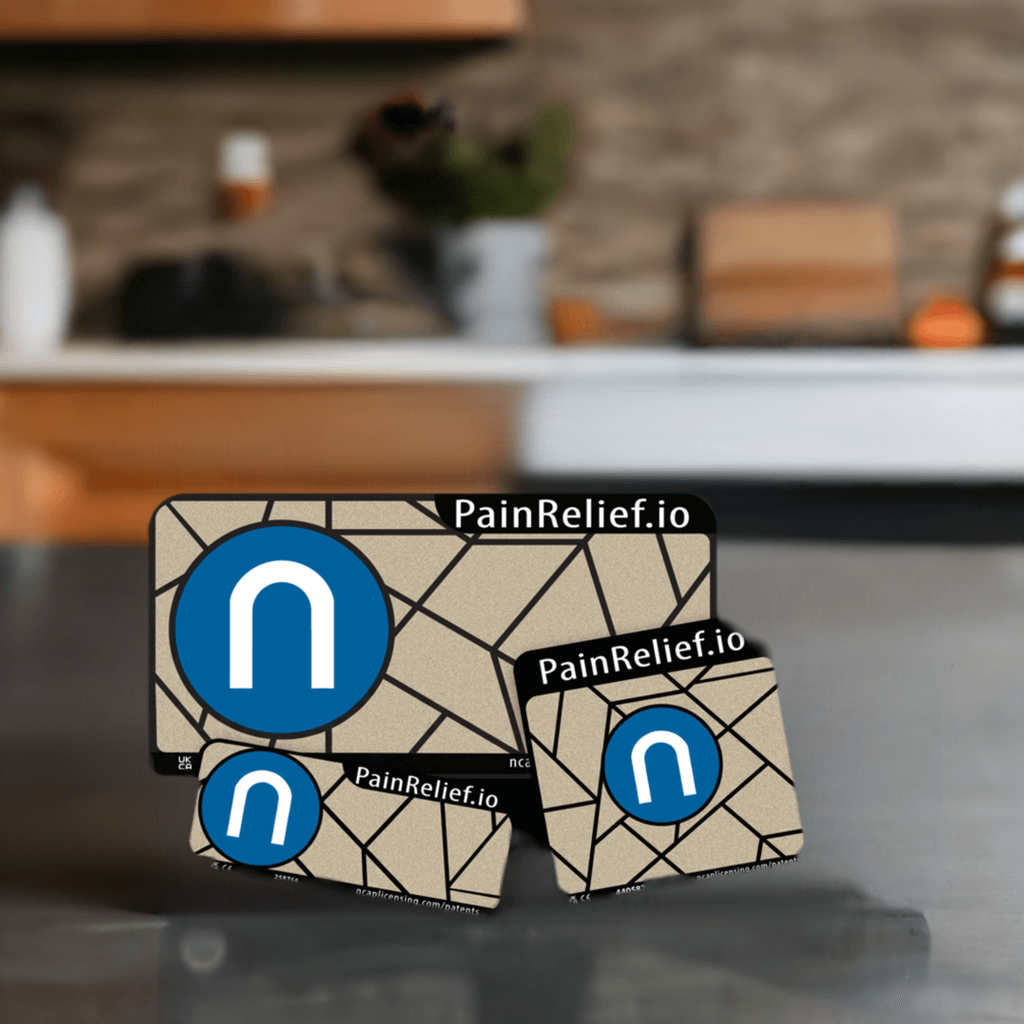
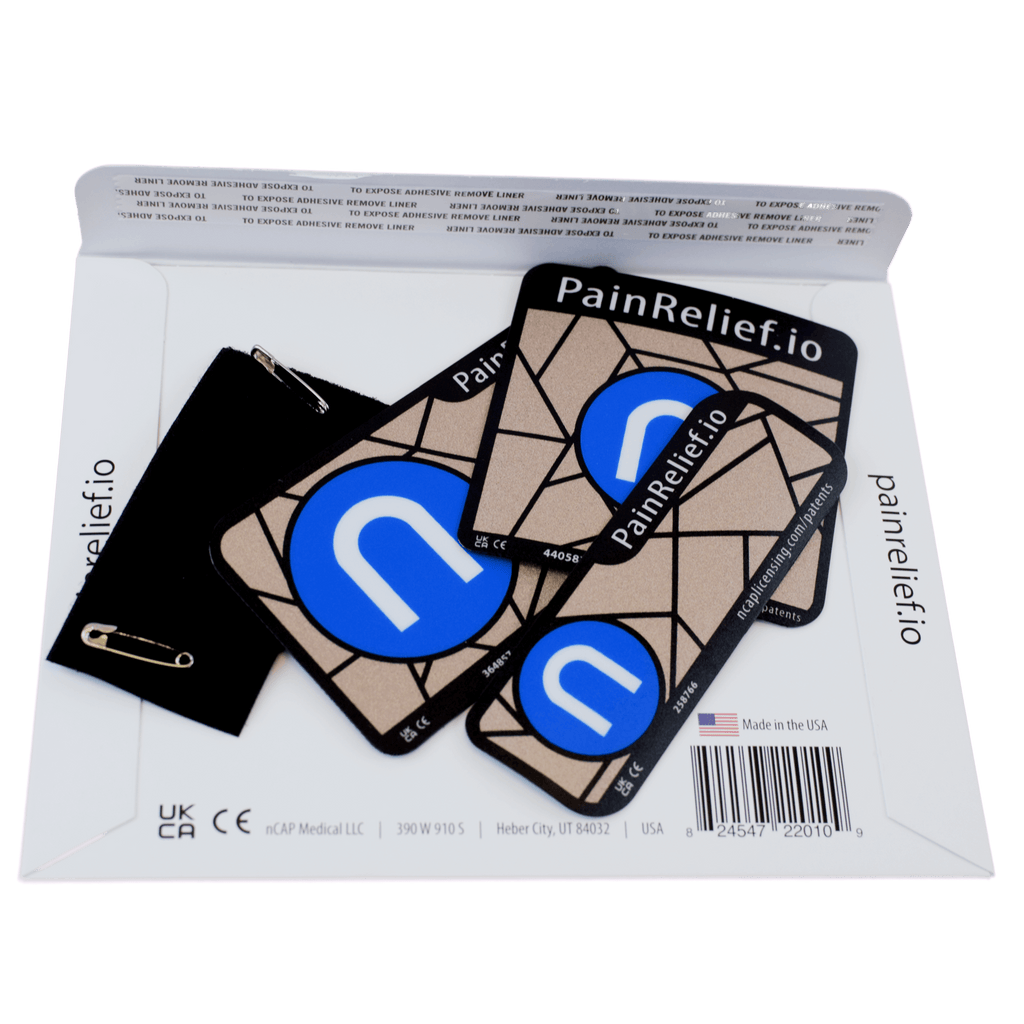
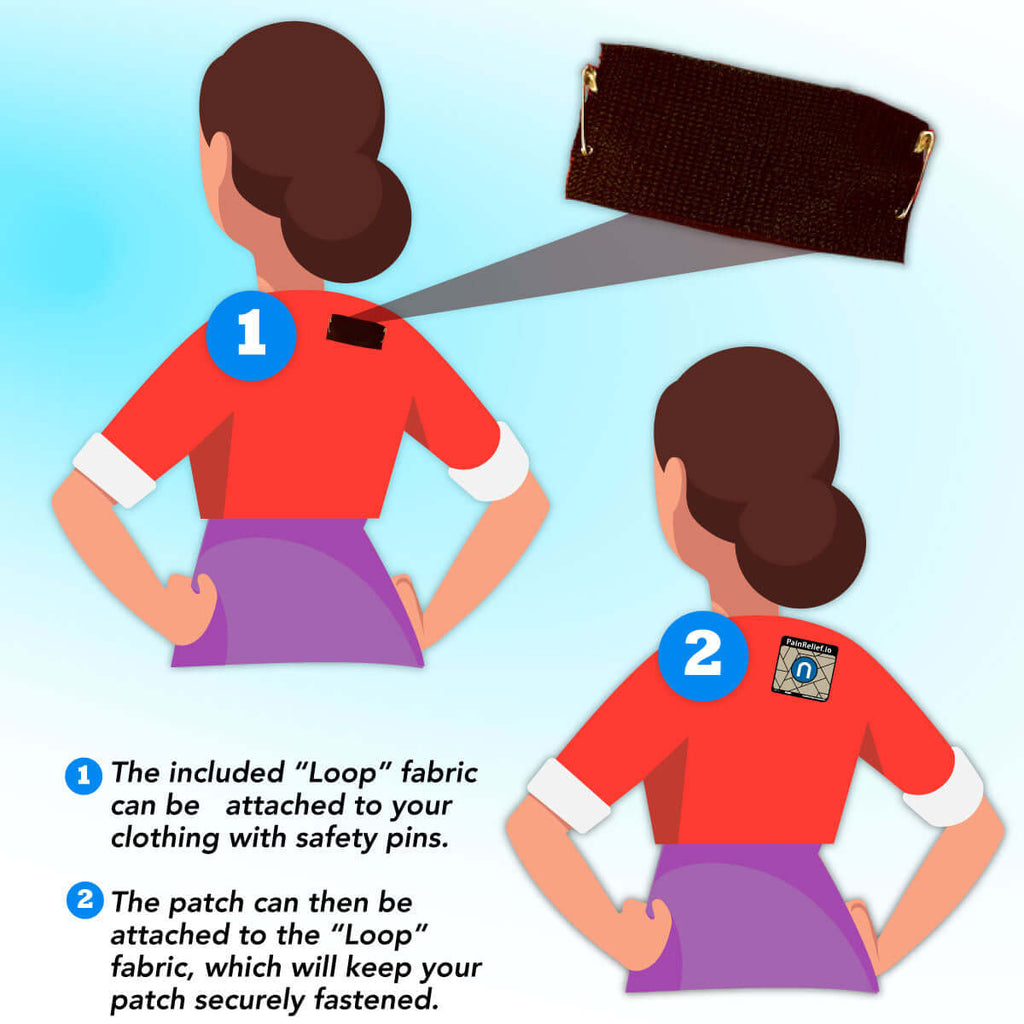
This is one reason reusable wearable options have become appealing to people looking for drug-free relief. Instead of relying on disposable creams, messy topicals, or single-use products, many people want something they can place with precision, wear comfortably, and use again and again. PainRelief.io® builds around this kind of real-world use, with sizes designed for specific body areas rather than a one-size-fits-all approach.
You do not need to guess. Before choosing a size, use your hand to outline the painful area.
If the discomfort fits within two or three fingertips, start small. If it covers an area closer to your full palm, a medium size is usually more realistic. If it spreads beyond your palm or wraps across a wider section of the body, look for larger coverage or a kit with multiple pieces.
Another practical test is to think about where you would place the center. If you can easily identify one central spot, you likely do not need the biggest option. If there is no obvious center because the whole area feels irritated, broader coverage is usually the better call.
This kind of quick self-check helps prevent overbuying and underbuying. Too small can leave part of the pain untreated. Too large can make placement harder than it needs to be.
One common mistake is choosing the biggest patch just to be safe. Bigger is not automatically better. If the painful area is compact, a large patch may add bulk without adding meaningful benefit.
Another mistake is choosing the smallest size because it seems more convenient. That works only when the pain is truly localized. If soreness extends into surrounding muscle or tissue, undersizing can leave you chasing relief around the edges.
People also tend to ignore referred pain. For example, neck tension can contribute to headaches, and jaw tension can extend toward the temple or ear. In those cases, the right size depends on whether you are treating one spot or a connected pattern of discomfort.
Finally, many people forget that chronic pain and acute pain may need different coverage. A fresh sore spot after exercise may be very specific. Longstanding pain often involves compensation, tension, and a wider area of irritation. If your pain has been around for a while, it may need more thoughtful sizing.
For headaches or temple tension, smaller pieces usually work best because the target area is limited and precise. For TMJ or jaw discomfort, smaller formats are often easier to place along the side of the face or near the joint.
For knee pain, medium sizing is often the sweet spot because the patch needs enough coverage to address the joint area without interfering with movement. For shoulder pain, it depends. A focused knot near the shoulder blade may need only moderate coverage, while broader tension across the upper shoulder may call for something larger.
For lower back pain, many people do better with a larger patch or multiple pieces because the pain often spreads across more than one point. For menstrual cramps, broader lower-abdomen coverage is usually more helpful than a small patch placed in just one spot.
That pattern repeats across the body. The more specific the pain, the smaller and more targeted the patch can be. The more diffuse the pain, the more coverage you generally need.
If you are between sizes, sizing up can be the better choice when pain radiates, shifts, or tends to flare in surrounding tissue. It can also make sense if you know the painful area is hard for you to place precisely on your own, like the middle of the back.
On the other hand, if the body area bends a lot, sits under fitted clothing, or needs discreet wear during a long day, staying smaller may be more practical. Relief only helps if you will actually use it.
The best size is the one that matches both your pain pattern and your routine. That combination matters more than the label on the package.
Choosing a pain patch should feel simple, not like another problem to solve while you are already uncomfortable. Start with where the pain really lives, how far it spreads, and how you need to wear it. When the size fits the pain, everything else tends to get easier.
Recherche
Terms of Service
Refund Policy
Contact Us
Ne pas vendre ou partager mes informations personnelles
Affiliates: Join or Log In
PATENTS
C'est simple à utiliser ! Placez simplement l'appareil au-dessus de votre douleur - Entre la douleur et le cerveau (tm) - et votre douleur commencera à s'estomper en quelques minutes. Le tout dans un appareil portable fin, réutilisable. Pas de piles, pas de fils, pas d'huiles malodorantes, pas de médicaments et ça agit rapidement !!
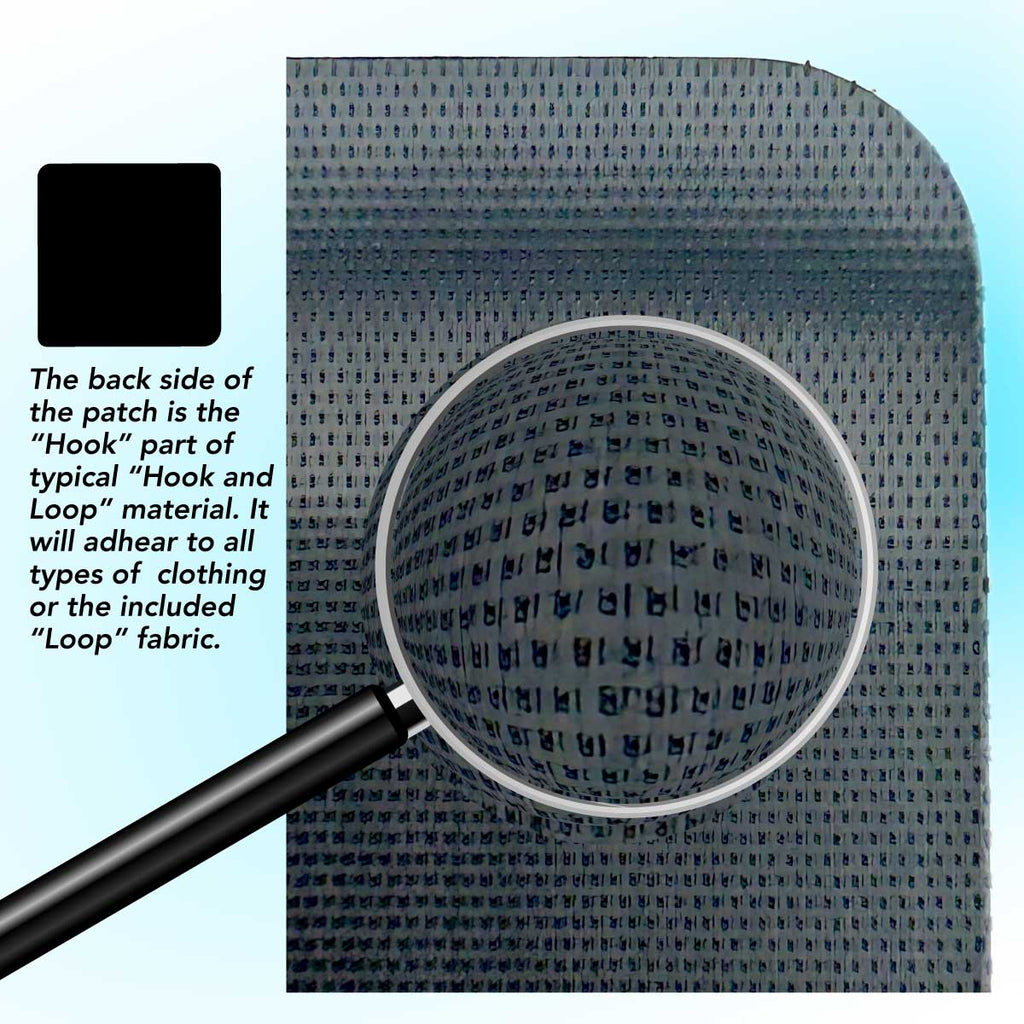
L'appareil est construit avec notre couche brevetée Neurocuple® scellée entre deux couches imperméables. Une fois placée au bon endroit, la couche Neurocuple® est activée directement par l'énergie du corps de l'utilisateur. Après quelques minutes, une sensation de chaud, de froid ou de picotement est ressentie par l'utilisateur à mesure que la douleur s'estompe.
L'appareil PainRelief.io® est un produit de bien-être général qui aide à promouvoir l'activité physique chez les utilisateurs souffrant de douleurs chroniques et intermittentes, ce qui, dans le cadre d'un mode de vie sain, peut aider à vivre avec ces conditions et peut retarder l'apparition des handicaps associés.