

A patch looks simple. You stick it on, wait, and hope the ache in your back, knee, neck, or shoulders finally eases up enough to get through the day. That is exactly why pain relief patches are so appealing - they promise targeted relief without another pill, another messy cream, or another interruption.
But not all patches work the same way, and not all pain responds to the same type of solution. If you have ever tried one patch that helped a little, another that did nothing, and a third that irritated your skin, you are not imagining things. The category is broad, and the differences matter.
At the most basic level, pain relief patches are designed to sit directly over or near an area of discomfort and provide localized support. That support can come in different forms. Some patches deliver ingredients through the skin. Others create a warming or cooling sensation. Some are meant to physically cover the area while holding active compounds in place. And newer wearable options aim to work with the body in a different way, without drugs or topical chemicals.
That distinction matters because pain itself is not one-size-fits-all. Muscle soreness after a workout is different from recurring knee pain. A stiff neck from hours at a desk is different from menstrual cramps or jaw tension. Even when the pain shows up in the same body part, the reason behind it can change what kind of relief actually feels useful.
A patch may help if your pain is localized, mild to moderate, and close enough to the skin for a targeted solution to make sense. It may be less helpful if your discomfort is widespread, deep, highly inflamed, or tied to an issue that needs medical evaluation.
Many traditional patches rely on active ingredients such as menthol, lidocaine, capsaicin, or anti-inflammatory compounds. These are familiar because they resemble creams and gels, just in a more convenient format. Instead of rubbing something in repeatedly, you apply the patch and leave it in place.
For some people, that is enough to make them worth using. They are portable, easy to understand, and often available without a prescription. If your goal is short-term relief for a sore shoulder or an overworked lower back, a topical patch can be a practical option.
The trade-off is that relief may be temporary, ingredient-dependent, and inconsistent. Some people are sensitive to adhesives or topical ingredients. Others do not want to rely on medicated products day after day. And if you are dealing with recurring pain, the ongoing cycle of peel, use, throw away, repeat can start to feel less like a solution and more like maintenance.
Some patches focus less on medication and more on sensation. Warming patches can help loosen tight muscles and create comfort in areas like the neck, back, or abdomen. Cooling patches may feel soothing for tension, minor strains, or headaches.
These options can be useful, especially when pain is tied to tightness or temporary overuse. Still, they do not work for every kind of pain, and the sensation itself can sometimes be the main effect. That is not necessarily a bad thing - comfort matters - but it helps to be clear about what you are using and what outcome you expect.
This is where the category gets more interesting. Some people want the convenience of a patch but not the medication, disposable waste, or frequent repurchasing. That has created growing interest in reusable, noninvasive wearable options designed to support pain relief without delivering drugs through the skin.
These products are not just trying to cover pain. They are built around the idea that the body has its own electrical environment and that influencing that environment may help calm pain signals. For people looking to reduce dependence on pills, creams, heating pads, or single-use patches, that difference can be meaningful.
The honest answer is that it depends on the match between the product and the pain.
If your discomfort is temporary and surface-level, a standard patch may feel effective quickly. If your pain comes back every week, every workout, every workday, or every month, the bigger question is not just whether a patch works once. It is whether the relief method fits your real life.
That is where frustration tends to build. Someone with chronic back pain may not want to keep buying disposable patches forever. Someone with migraines may not want strong scents or skin irritation near the temples. Someone with menstrual cramps may want relief they can reuse month after month, not another box to reorder. Someone with TMJ pain may need something small, flexible, and easy to place near the jaw.
Pain is personal, but usability matters just as much as the pain itself. A product can be effective in theory and still be a poor fit if it is bulky, messy, medicated, short-lived, or limited to one body area.
For recurring pain, reusability changes the equation.
A reusable option can be more practical if you deal with pain in cycles or patterns - lower back pain after long shifts, knee discomfort during activity, shoulder tension from desk work, headaches that flare under stress, or cramps that show up every month. Instead of treating each episode as a separate event, you have a tool ready when you need it.
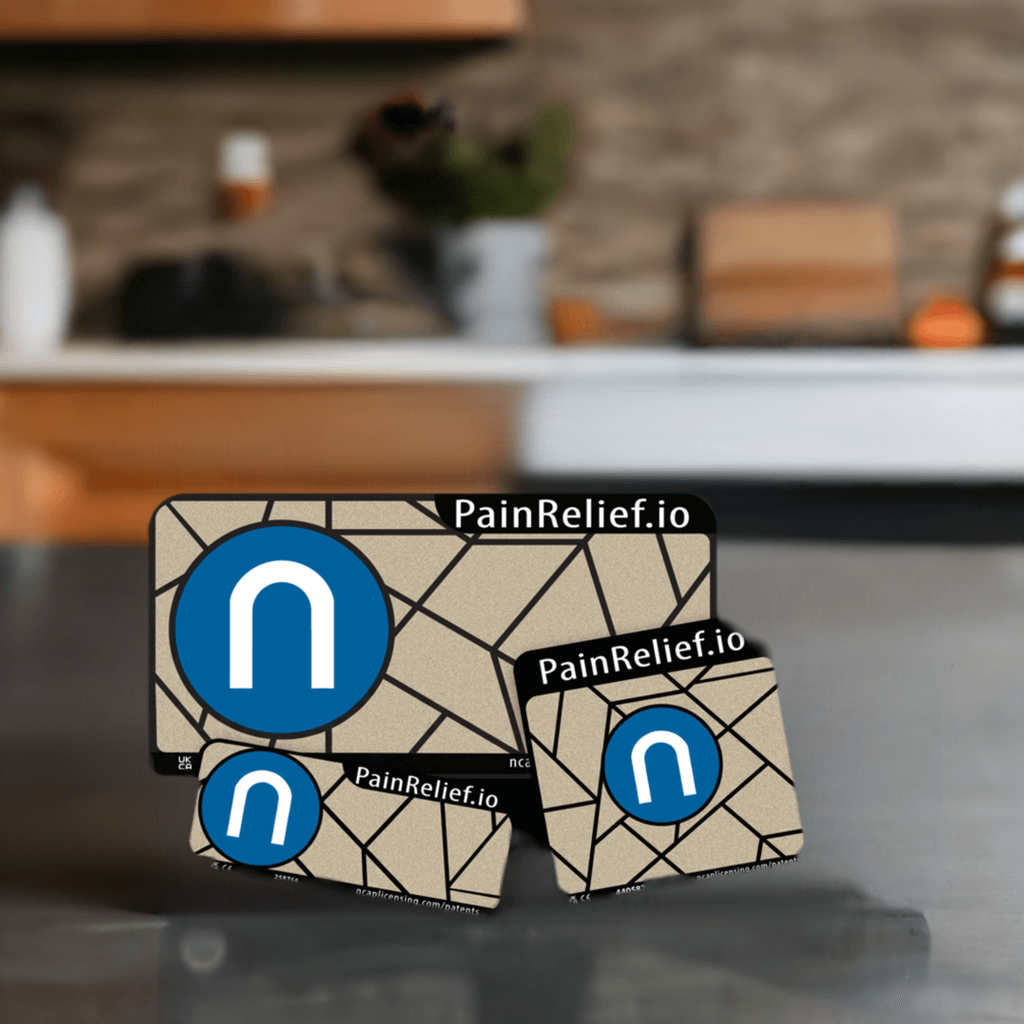
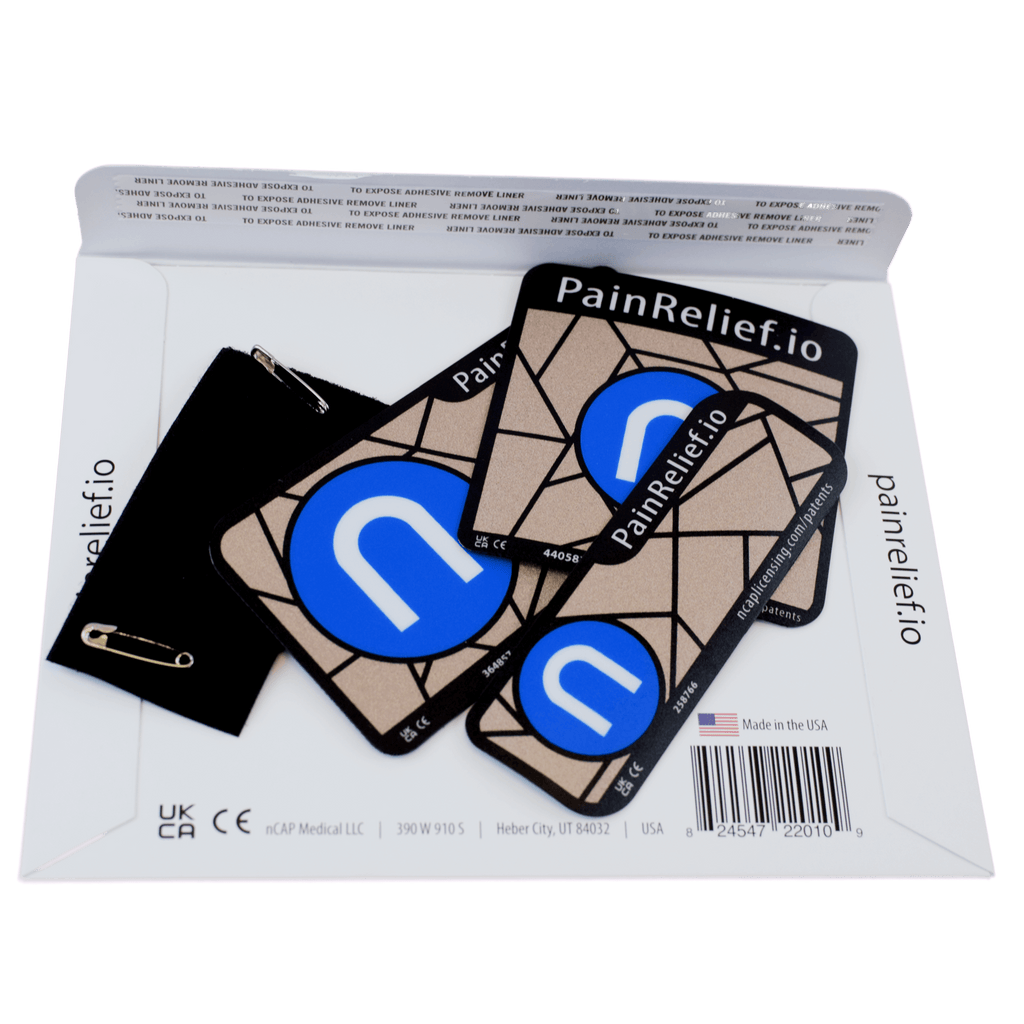
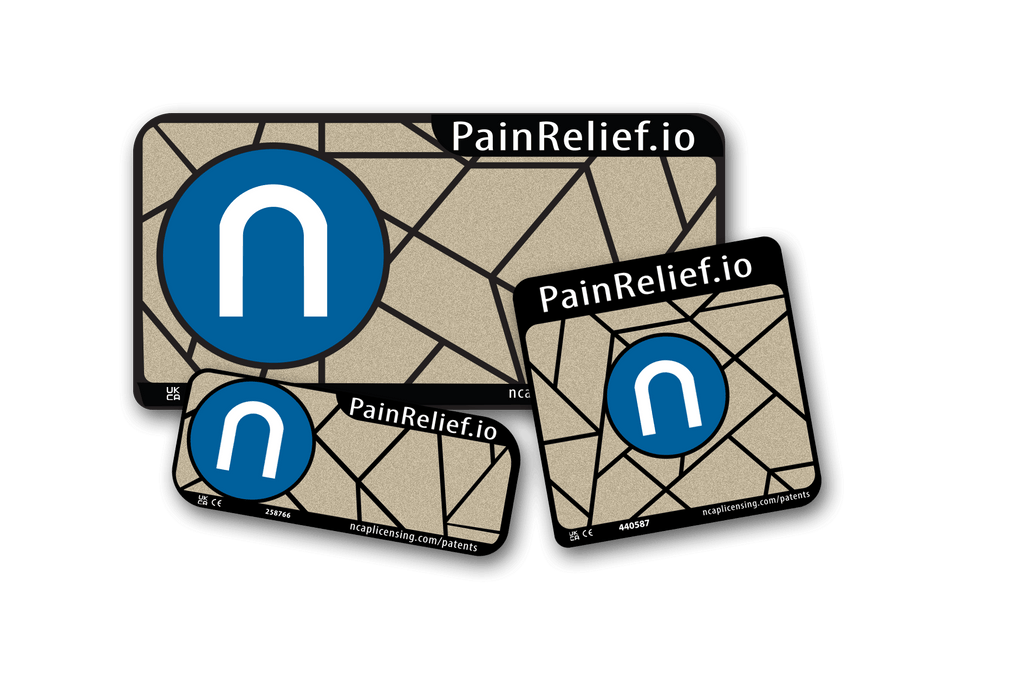
That is one reason drug-free wearable pain relief devices have gained traction. Rather than relying on ingredients that wear off, some are designed for repeated use across different pain types and body areas. PainRelief.io® is one example of this shift, using patented NeuroCuple® nanocapacitive technology in reusable, battery-free wearable devices meant to support relief without drugs, wires, or topical applications.
That does not mean reusable options are automatically better for everyone. If you only get occasional soreness a few times a year, a disposable patch may be enough. But if pain is a regular part of your routine, cost, convenience, skin tolerance, and long-term usability start to matter more.
Start with the pain pattern, not the product category.
If the pain is occasional, mild, and easy to localize, a traditional patch may be a simple first step. If the pain is recurring, and you are specifically trying to avoid medication or repeated purchases, a reusable drug-free option may be more aligned with what you actually need.
Then think about placement. Some solutions work best on broad areas like the lower back. Others are better for smaller zones like the jaw, temples, or knee. A patch or wearable that is too large, too stiff, or too weak for the area will feel disappointing even if the underlying concept is sound.
Skin sensitivity is another factor people often underestimate. Adhesives, menthol, and other ingredients can be irritating, especially with frequent use. If that has been an issue for you before, it makes sense to look closely at materials, wear time, and whether the solution depends on chemical actives.
Finally, ask a practical question: can you see yourself using this repeatedly? Not in the abstract - in real life. At work. At home. While moving around. During a commute. During a headache. During cramps. During a flare-up when your patience is already low. The simpler the relief method is to use, the more likely it is to become something you actually rely on.
It is easy to treat pain products like a yes-or-no test. Either they work or they do not. In reality, the better question is whether a specific tool matches the kind of pain you have, the way it shows up, and the kind of relief you want to live with.
For some people, pain relief patches are a useful short-term fix. For others, they are a stepping stone toward a more sustainable, drug-free approach. If you have been stuck in the cycle of temporary relief, recurring pain, and constant replacement, it may be time to think less about patching over the problem and more about choosing a wearable solution you can use again and again.
The best pain relief product is not the one with the loudest claim. It is the one you will actually reach for when pain shows up and life still needs to keep moving.