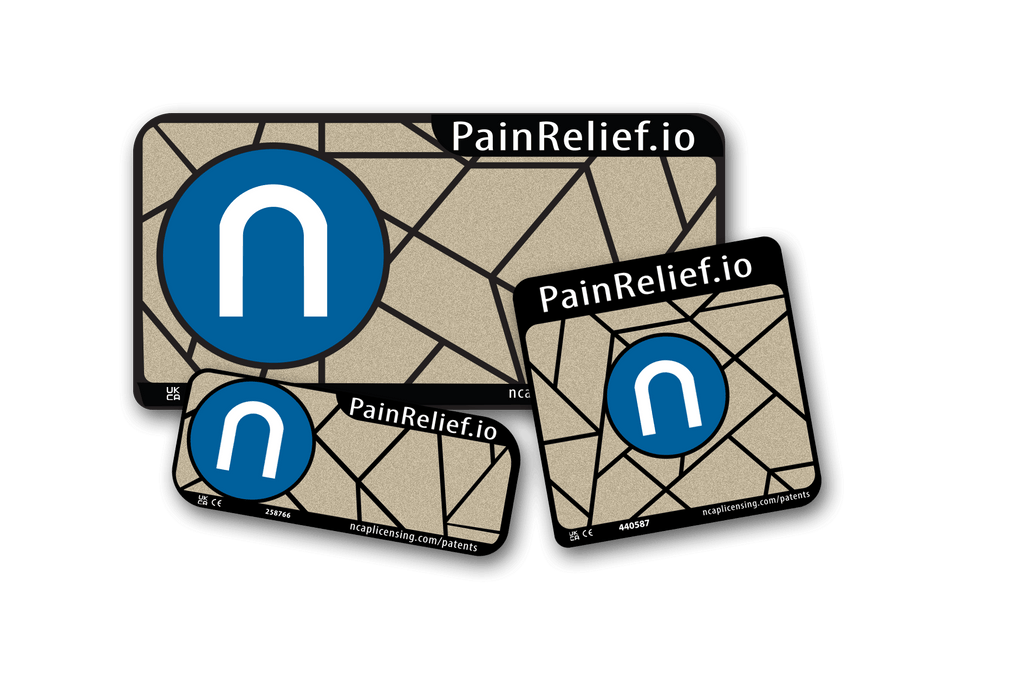

¡Envío y devoluciones gratis por encima de $100!
Pain tends to show up at the worst possible moment - halfway through a workday, after a tough workout, during a long drive, or right when you are trying to sleep. That is exactly why interest in the battery free pain relief device category keeps growing. People want something simple, wearable, and reusable that does not depend on pills, cords, charging, or messy creams.
A battery free pain relief device is a wearable tool designed to support relief without electricity from a charged power source, without medication, and without invasive treatment. In most cases, it is applied directly over or near the area of discomfort, such as the back, shoulder, knee, jaw, neck, or lower abdomen.
That simplicity is a big part of the appeal. There is nothing to plug in, no app to pair, and no routine to manage beyond proper placement. For people already dealing with recurring discomfort, removing friction matters. If a product is too complicated, it often ends up in a drawer.
Not every device in this category works the same way, though. Some products rely on compression or heat-retention materials. Others are built around interaction with the body’s own bioelectrical signals. That difference matters, because the experience, wearability, and long-term value can vary quite a bit from one product to the next.
Most adults who shop this category are not looking for novelty. They are looking for relief they can actually live with. Maybe they are tired of taking medication for every flare-up. Maybe topical products feel temporary, smell strong, or create a mess. Maybe disposable patches seem convenient at first, but the cost adds up fast when pain is frequent.
A battery free pain relief device appeals to a different kind of buyer - someone who wants support that can fit into ordinary life. They want to place it, wear it, and keep moving. They also want something they can use again and again, instead of tossing it after one use.
This is especially true for recurring issues like back strain, sore knees, tension headaches, TMJ discomfort, menstrual pain, and overuse soreness. These are not always one-time events. They often come back, and that changes how people evaluate value. Reusable support can make far more sense than constantly restocking short-term solutions.
The most useful way to understand this category is to separate the power source from the mechanism. Battery-free does not mean inactive. It means the product is not relying on an external electrical charge or motor to operate.
Some advanced wearable devices are designed to interact with the body’s natural electrical environment. The body runs on electrical communication. Nerves, muscles, and signaling pathways all depend on electrical activity. A patented device in this category may be engineered to work with that environment rather than overpower it with a powered output.
That is one reason invention and patent protection matter here. If a company claims a distinct mechanism, the credibility often depends on whether that technology is original, protected, and clearly explained. A well-designed device should not require the customer to become an engineer, but it should offer a believable reason for why the product exists and how it differs from a generic patch.
At the same time, expectations should stay realistic. No wearable product is the right answer for every person, every condition, or every pain level. Body chemistry, placement, pain source, and consistency of use all affect the experience. The best brands are clear about that. Confidence is good. Overpromising is not.
For most shoppers, the real advantages are practical before they are technical. First, there is convenience. If a device is wire-free and battery-free, it is easier to use at your desk, in the car, on a walk, or while winding down at home.
Second, there is reusability. A product made to last for years changes the math. Instead of repeatedly buying creams, wraps, or disposable patches, you are investing in a tool you can keep using for recurring pain points.
Third, there is comfort with a drug-free option. Many people are not anti-medicine. They simply do not want medication to be their only option for every ache, flare-up, or sore spot. A noninvasive wearable device can become part of a broader routine that includes movement, rest, hydration, physical therapy, or recovery habits.
And fourth, there is specificity. The strongest products in this space are not sold as one-size-fits-all miracle fixes. They are matched to body area and use case. That matters because a device meant for low back support may not be ideal for the jaw, temple, or knee.
This category tends to make the most sense for people managing localized discomfort that shows up often enough to justify a reusable solution. Think of the person with a stiff lower back after long hours sitting, the runner with recurring knee soreness, the desk worker with neck tension, or the person dealing with monthly menstrual discomfort.
It can also be appealing for people in injury recovery, as long as they understand the device is support, not a substitute for diagnosis or treatment. The same is true for active adults who experience muscle fatigue and overuse strain. If the issue is common, predictable, and tied to a specific area of the body, a wearable device may fit naturally into the routine.
Where people should pause is when pain is severe, unexplained, rapidly worsening, or tied to a larger medical issue that has not been assessed. A consumer pain relief device has its place, but it is not a shortcut around medical care when medical care is needed.
The phrase battery-free sounds appealing, but it should not be the only reason to choose a product. Start with the technology itself. Is the mechanism clearly explained in plain language, or is the marketing hiding behind vague claims? If a company has patented technology and inventor-led credibility, that is usually more reassuring than generic wellness language.
Next, look at placement and sizing. This is often overlooked, but it has a major impact on user experience. Pain is personal, and body areas differ. A device sized for broad back coverage is not the same as one designed for smaller joints or targeted facial tension. Brands that guide customers by body area tend to make the process easier and reduce guesswork.
Then consider wearability. Can you use it while working, walking, resting, or doing light daily activities? If a device only works in theory but is annoying to wear, that matters.
Finally, look at the trial window and return policy. Pain response is individual. A strong satisfaction guarantee shows that the company understands people may need time to test placement and day-to-day use before deciding whether the product is right for them.
The pain relief market is full of lookalike products. From a distance, many wearables can seem interchangeable. Up close, they are not.
A patented battery free pain relief device stands apart when the technology is original, protected, and developed with a specific mechanism in mind. That is more than a branding detail. It affects trust. If you are putting something on your body and using it repeatedly, you should know whether the product is based on real invention or just clever packaging.
That is one reason consumers often gravitate toward inventor-led brands. The story behind the product matters. It signals that the device was created to solve an actual problem, not simply to chase a trend. PainRelief.io, for example, centers that inventor-driven credibility alongside practical wearability and a reusable design built for real-life pain scenarios.
The best results in this category usually come from matching the device to the right problem, placing it correctly, and using it consistently enough to judge it fairly. Some people feel support quickly. Others need more experimentation with exact location and routine.
That does not mean the product is ineffective. It means pain is not one-dimensional. A headache tied to jaw tension is different from post-workout soreness. Menstrual discomfort is different from repetitive strain in the wrist or shoulder. The more specific the use case, the more useful the product comparison becomes.
A battery free pain relief device is not appealing because it is trendy. It is appealing because, for the right person, it removes friction from relief. No charging. No wires. No drugs. No throwaway design. Just a practical tool that fits into everyday life and gives people one more option when pain keeps interrupting it.
If you are considering one, look for clarity over hype and reusability over short-term gimmicks. The best pain support is often the kind you will actually keep using.
Buscar
Terms of Service
Refund Policy
Contact Us
No vender ni compartir mi información personal
Affiliates: Join or Log In
PATENTS
¡Es fácil de usar! Simplemente coloque el dispositivo encima de su dolor, Between the Pain and the Brain(tm) , y su dolor comenzará a desaparecer en minutos. Todo en un dispositivo portátil, delgado y reutilizable. ¡Sin baterías, sin cables, sin aceites malolientes, sin drogas y es de acción rápida!
El dispositivo está construido con nuestra capa patentada Neurocuple® sellada entre dos capas impermeables. Una vez colocada en el lugar correcto, la capa Neurocuple® se activa directamente por la energía del propio cuerpo del usuario; después de unos minutos, el usuario siente una sensación de calor, frío u hormigueo a medida que el dolor desaparece.
El dispositivo PainRelief.io® es un producto de bienestar general que ayuda a promover la actividad física para los usuarios con dolor crónico e intermitente, que, como parte de un estilo de vida saludable, puede ayudar a vivir con estas condiciones y puede retrasar la aparición de discapacidades relacionadas.