
A cramp can turn an ordinary workday into hours of distraction, missed opportunities, or simply trying to get through the next meeting. It can also interfere with sleep, exercise, travel, concentration, and plans you were looking forward to.
For many people, this happens month after month. That makes menstrual pain less of an occasional inconvenience and more of a recurring problem that needs a practical, repeatable solution.
Menstrual cramp patches are one option people consider when they want targeted comfort without reaching first for a pill, cream, or bulky heating pad. However, the term menstrual cramp patch can describe several very different products.
Some patches create heat. Some contain ingredients that warm or cool the skin. Others are wearable devices designed to interact with the body’s bioelectrical environment. Understanding the differences can help you choose an option based on your symptoms, lifestyle, and comfort preferences rather than relying only on a package promise.
What Menstrual Cramp Patches Are Designed to Do
Most period cramps begin when the uterus contracts to shed its lining. Prostaglandins, which are hormone-like compounds involved in inflammation and muscle contraction, can make those contractions stronger.
For some people, the discomfort remains concentrated in the lower abdomen. For others, it can spread into the lower back, hips, or thighs and may be accompanied by fatigue, nausea, headache, or bowel changes.
A menstrual cramp patch does not change the fact that a period is occurring. Its purpose is generally to provide localized support while you continue moving through your day.
Depending on the product, that support may come from:
- Warming tight or achy areas
- Creating a cooling or tingling sensation
- Delivering electrical stimulation
- Supporting the body’s natural pain-signaling environment
The localized approach is part of the appeal. Instead of addressing the entire body, the product is positioned where discomfort is most noticeable, commonly below the belly button or across the lower back.
The best option is not necessarily the one that creates the strongest sensation. It is the one you can use comfortably, consistently, and conveniently when cramps begin to interfere with your life.
The Main Types of Menstrual Cramp Patches
Disposable Heat Patches
Heat patches are the most familiar category. They typically begin producing warmth after the package is opened and may continue warming the area for several hours.
Heat can feel soothing for dull, achy cramps or lower-back discomfort, and disposable patches can often be worn beneath clothing.
The trade-off is that they must be replaced after each use. For someone who experiences cramps every month, repeated purchases can add up over time. Some users may also find the heat uncomfortable during extended wear or irritating to sensitive skin.
Ingredient-Based Patches
Ingredient-based patches may contain menthol, capsaicin, essential oils, or other topical ingredients intended to produce warming, cooling, or tingling sensations.
Some people appreciate the immediate sensory effect. Others may find the scent, residue, adhesive, or skin sensitivity frustrating.
These products may not be the best fit for people who react easily to topical formulas, fragrances, or adhesive materials.
Electrical Stimulation Devices
Wearable electrical stimulation devices use small electrical currents, often delivered through adhesive electrode pads connected to a separate control unit.
They can be helpful for some users, but they typically require batteries or charging, replacement electrodes, wires, settings, and an adjustment period.
Electrical stimulation devices may also be unsuitable for people with certain implanted medical devices or other contraindications. Manufacturer instructions and medical guidance should always be followed.
Reusable Nanocapacitive Wearables
Reusable nanocapacitive wearables represent a different category of drug-free support.
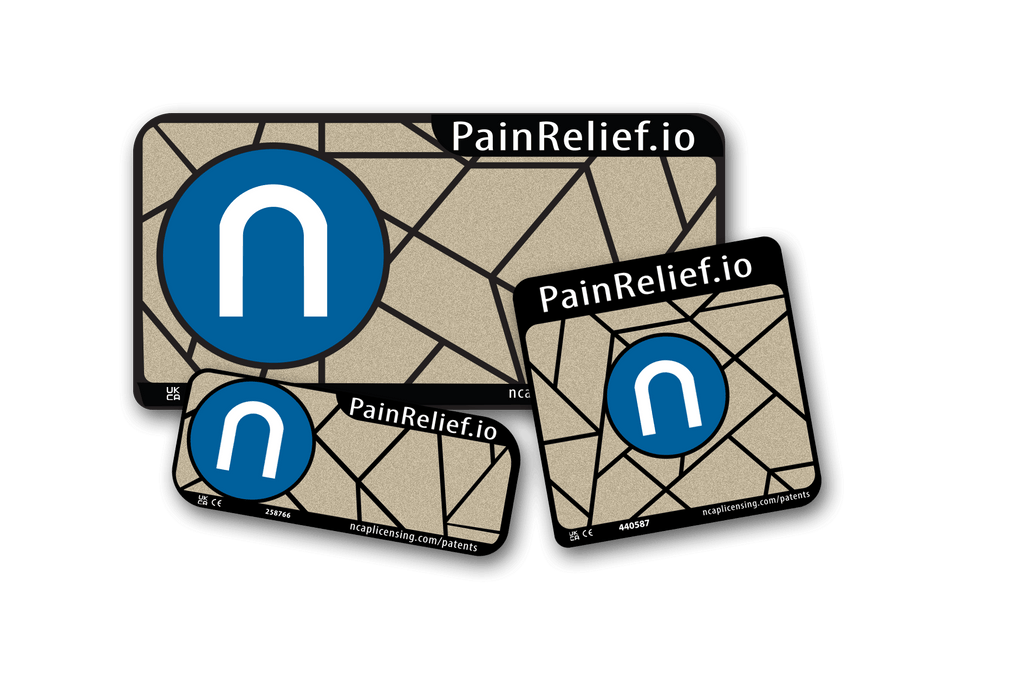
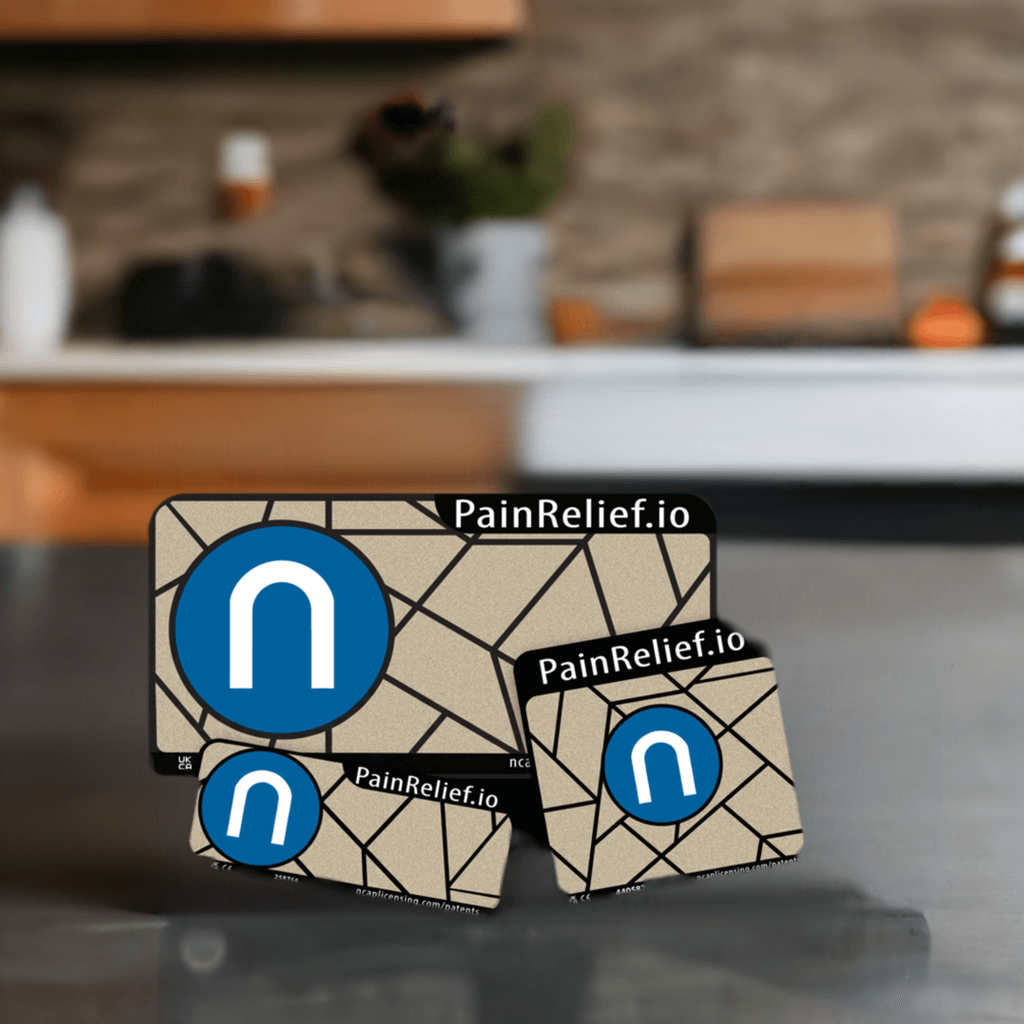
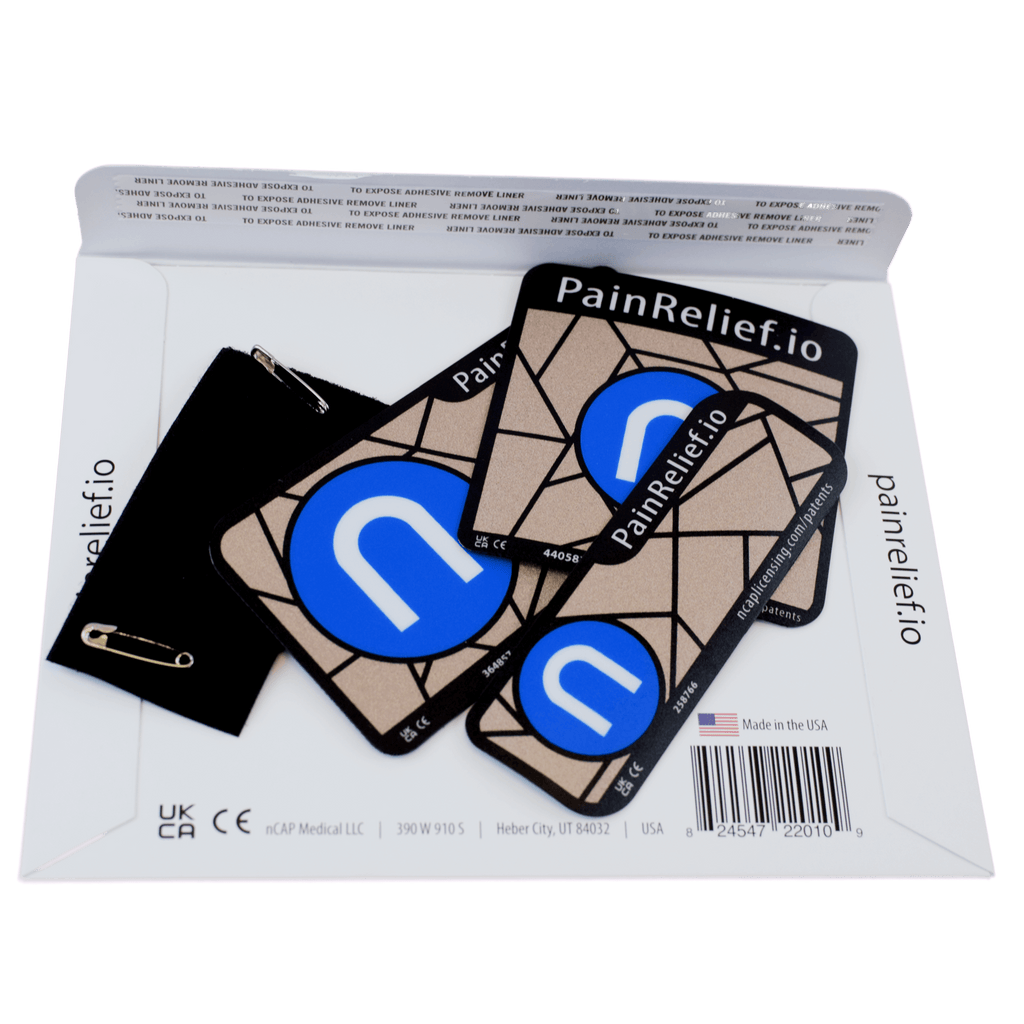
PainRelief.io® devices use patented NeuroCuple® technology in a lightweight, battery-free and wire-free wearable designed to interact with the body’s natural bioelectrical environment.
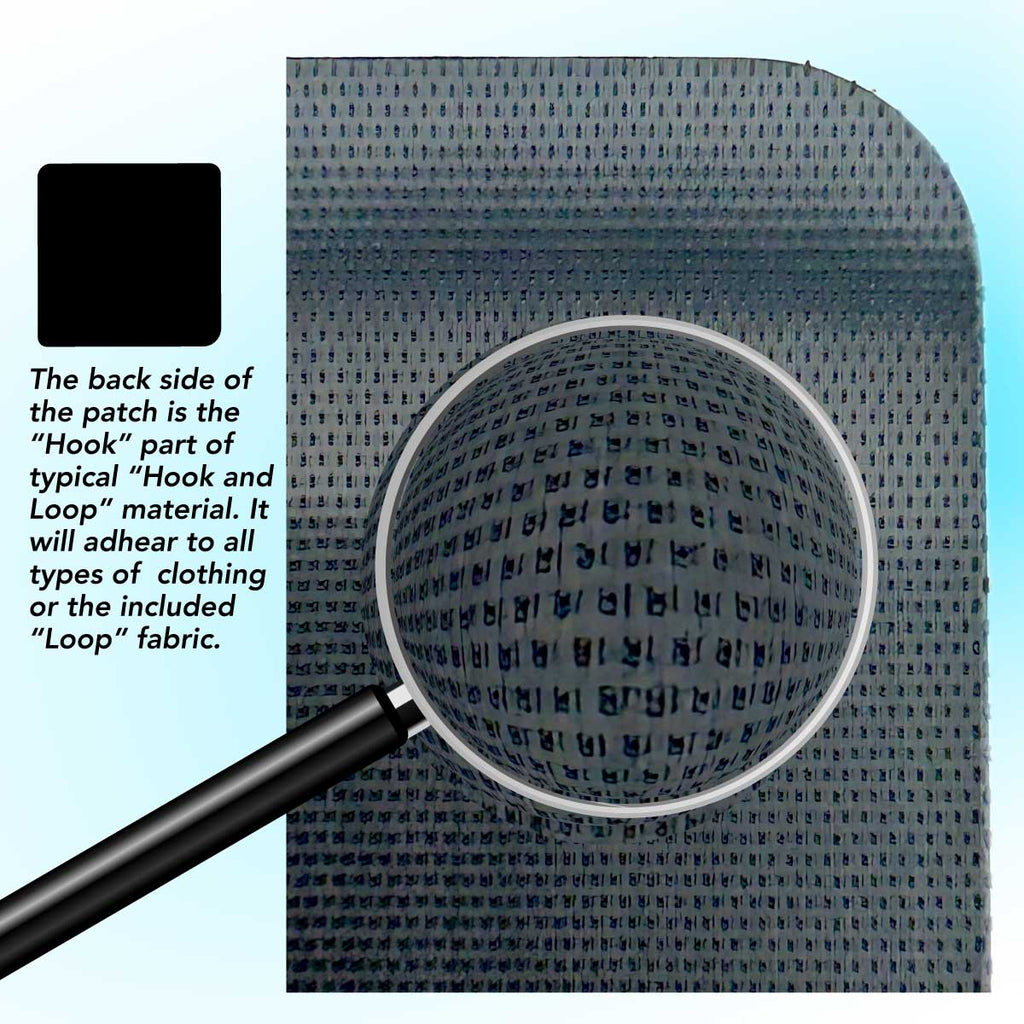
Unlike products that rely on medication, topical ingredients, electrical pulses, charging, or disposable heating components, NeuroCuple® does not require batteries, wires, gels, or replacement electrodes.
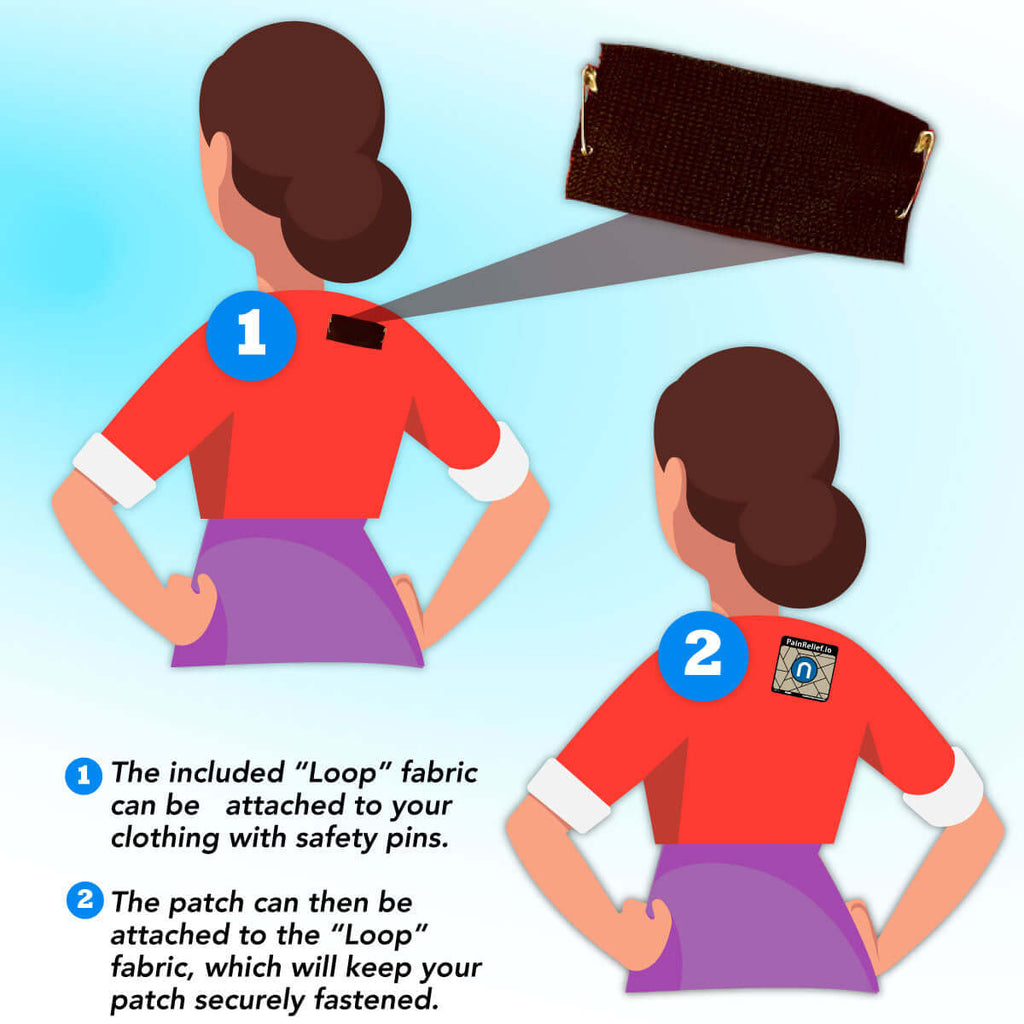
The wearable is positioned over the area of discomfort and can be used repeatedly. For people who experience menstrual pain every month, that can make it a practical option to keep in a purse, backpack, desk drawer, or bedside table so it is available when symptoms begin.
Because it is reusable, the same wearable may also be used for other areas of everyday discomfort, including the lower back, neck, shoulders, knees, or sore muscles.
Quick Comparison of Menstrual Cramp Patch Options
| Option | How It Works | Reusable | Needs Power | Topical Ingredients |
|---|---|---|---|---|
| Heat patch | Produces localized warmth | Usually no | No | Usually no |
| Ingredient patch | Creates warming, cooling, or tingling sensations | Usually no | No | Yes |
| Electrical stimulation device | Delivers small electrical pulses | Yes | Yes | No |
| NeuroCuple® wearable | Designed to interact with the body’s bioelectrical environment | Yes | No | No |
How to Choose a Patch for Your Cramp Pattern
Consider Where You Feel the Pain
Start with the location and character of the discomfort.
If your cramps feel like a heavy, tight sensation in the lower abdomen and warmth reliably helps, a heat patch may be a practical short-term choice.
If your lower back hurts as much as your abdomen, you may prefer a solution that can be positioned wherever the pain is most concentrated rather than one designed only for the front of the body.
Think About When You Need Support
A traditional heating pad can be comfortable at home, but it may be less practical during a commute, at work, in class, while traveling, or when moving between activities.
A discreet wearable may make more sense when you want to move freely, exercise lightly, sit through meetings, or continue your day without managing cords, reheating, charging, or replacement parts.
Period pain rarely arrives at a convenient time. For many users, convenience is not an extra feature. It is one of the main reasons a product gets used consistently.
Consider Reusability
Menstrual discomfort is often recurring, so even a low-cost disposable product can become expensive when purchased cycle after cycle.
A reusable wearable may have a higher initial cost, but it can be the more practical long-term choice for someone who expects to use it every month.
Reusability may be especially valuable when the same product can also be used for occasional lower-back pain, neck tension, muscle soreness, knee discomfort, or other everyday aches.
Look for a Reasonable Trial Period
No menstrual cramp product works identically for every person or during every cycle.
A useful product should be easy to position, comfortable against skin or clothing, and simple enough to reach for before discomfort escalates. A generous trial period can make it easier to evaluate a new option across more than one use or one difficult day.
Placement Can Change the Experience
For lower abdominal cramps, placement is generally most useful over the area where you feel the discomfort most clearly. This is often below the belly button and above the pubic bone.
For discomfort that radiates through the lower back, positioning the wearable across the low-back area may feel more relevant to the symptoms you are trying to manage. Some people find the back particularly important when sitting makes cramps feel worse.
Always follow the manufacturer’s instructions. Avoid placing any wearable or adhesive product over broken, irritated, or freshly shaved skin.
If your skin becomes red, itchy, painful, or irritated, remove the product. More pressure, more heat, or longer wear is not automatically better.
Why Early Use May Be More Practical
Many people wait until menstrual pain becomes difficult to ignore before reaching for relief. By that point, the discomfort may already be affecting concentration, movement, mood, or productivity.
Keeping a reusable wearable nearby makes it possible to respond when the first signs of cramping begin rather than waiting until the pain has taken over the day.
For some people, acting early makes it easier to stay engaged with work, school, travel, exercise, or family responsibilities.
Building a Drug-Free Cramp Plan
A menstrual cramp patch can be one part of a broader plan rather than the entire plan.
Gentle movement may reduce the feeling of stiffness for some people, even when a hard workout is the last thing they want. A short walk, light stretching, or a few minutes of slow movement may help change how the lower back and hips feel.
Hydration, regular meals, and adequate sleep do not eliminate cramps, but they may make a difficult cycle easier to manage.
Preparation can also help. Keep your preferred wearable where it is easy to reach and consider using it when discomfort first appears instead of searching for a solution after symptoms have intensified.
Medication can still have an important role, particularly for severe pain, and decisions about medication should be made with a qualified healthcare professional when needed.
Choosing a drug-free option does not have to mean making an all-or-nothing commitment. It can simply mean having another tool available, reducing how often you feel forced to rely on medication, or gaining more control over how you manage recurring discomfort.
When Period Pain Needs Medical Attention
Menstrual cramps are common, but severe or changing pain deserves medical attention.
Speak with a healthcare professional if your cramps:
- Suddenly become much worse
- Do not improve with your usual measures
- Cause you to miss work or school regularly
- Are accompanied by very heavy bleeding
- Occur with fainting, fever, or severe weakness
- Happen between periods
- Are associated with pain during sex
Conditions such as endometriosis, fibroids, adenomyosis, pelvic inflammatory disease, and ovarian cysts can cause pelvic pain that may initially feel like ordinary menstrual cramps.
A patch or wearable may provide comfort, but it should not delay evaluation of symptoms that are new, intense, persistent, or disruptive. You know what is normal for your body better than anyone else.
A Reusable Option for Recurring Discomfort
The best menstrual cramp solution is one you will actually use when you need it.
For some people, that may be a disposable heat patch. Others may prefer an ingredient-based product or an electrical stimulation device.
For people looking for a reusable, drug-free option without batteries, wires, topical ingredients, or disposable heating elements, a NeuroCuple® wearable offers another approach.
It is lightweight, discreet, reusable, and designed to be positioned directly over the area where discomfort is most noticeable.
Ready to Try a Different Approach?
Explore reusable PainRelief.io® wearables powered by patented NeuroCuple® technology.
No pills. No batteries. No wires. Just a simple wearable option you can keep nearby whenever discomfort begins.
This article is provided for general educational purposes and is not a substitute for professional medical advice, diagnosis, or treatment. Seek medical care for severe, persistent, unusual, or worsening symptoms.